

Over the past three years, Chinese PCB manufacturers in Thailand have gone from a handful of pilot projects to one of the biggest supply-chain stories in the printed circuit board industry. By 2026, dozens of listed Chinese PCB companies have broken ground, ramped production, or announced expansion in Thailand’s industrial parks — reshaping where global buyers source multilayer boards, HDI, and automotive-grade circuitry.
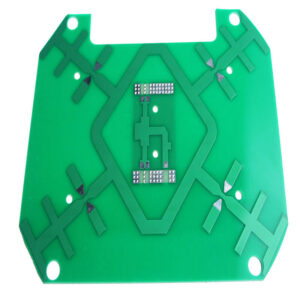
PCB
How Big Is the Move, Really?
The scale is larger than most buyers realize. Thailand’s Board of Investment has reported more than 95 PCB manufacturing construction or expansion projects underway, with the majority originating from mainland Chinese or Taiwanese companies. Industry associations tracking the trend put the number even more precisely: by the end of August 2024, 30 mainland Chinese listed PCB companies had invested in Thailand, with combined investment exceeding RMB 17.5 billion. Sources close to the industry note that at least seven of China’s top ten PCB manufacturers already operate production facilities in Thailand.
The move isn’t limited to PCB fabricators alone — it’s pulling the supporting supply chain with it. Of the 30 companies tracked, 21 are PCB producers and 9 are related supply-chain suppliers, meaning materials, equipment, and consumables vendors are following their customers into Thailand rather than waiting for demand to develop locally.
WUS Printed Circuit (沪电股份): A Closer Look at the Ramp-Up
Among all the Chinese PCB makers building in Thailand, WUS Printed Circuit offers the clearest public picture of what a ramp-up actually looks like quarter to quarter. According to the company’s own investor disclosures, the Thailand base generated approximately RMB 289 million in revenue for all of 2025. That grew to roughly RMB 295 million in Q1 2026 alone — already surpassing the entire prior year in a single quarter — and by Q2 2026, monthly output at the facility had exceeded RMB 150 million.
That trajectory suggests the Thailand base is on track for a meaningful jump in both scale and profitability through the rest of 2026, though the company has described operational profitability there as a target it is “steadily working toward” rather than a milestone it has formally confirmed. Capacity utilization in the data communications division topped 90% in Q1 2026, with over 70% of overseas customers already certified — the kind of qualification progress that typically precedes a plant moving from break-even to consistent profit.
Where Things Stand in 2026: Company by Company
| Company | Thailand Location | Investment | 2026 Status |
|---|---|---|---|
| WUS Printed Circuit (沪电股份) | Prachinburi | ¥4.75B+ (capital increase) | Fully transitioned from ramp-up to large-scale operation; 2025 revenue ~¥289M, Q1 2026 ~¥295M, Q2 monthly output over ¥150M |
| Kinwong Electronic (景旺电子) | Prachinburi, Kim Chaeng Industrial Park | Up to ¥700M | Groundbreaking ceremony held October 2024, construction phase |
| AoHong Electronics (澳弘电子) | Prachinburi, Kim Chaeng Industrial Park | Up to ¥600M | Construction underway; mass production targeted for 2026, adding 1.2 million sqm annual PCB capacity |
| Shennan Circuits (深南电路) | Thailand (new JV entity) | ¥1.274B | Board-approved investment for a new subsidiary to build and operate the Thailand plant |
| Chongda Technology (崇达技术) | Thailand, ~168 mu | ~¥1.2B (Phase 1) | Equipment installation and commissioning set to complete by end of 2026, targeting high-multilayer and high-end HDI capability |
| Dongshan Precision (东山精密) | Thailand | Up to $1B | Production start targeted as early as Q4 2025, focused on FPC modules and high-end PCB |
| Founder PCB / IFOUND (方正科技) | Rojana Prachinburi Industrial Park | — | Groundbreaking ceremony held January 2024 |
Why the Migration Is Accelerating
Three forces are driving the pace:
- Customer-led geopolitics. PCB manufacturers are expanding into Thailand and Malaysia largely to respond to customer bases shaped by geopolitical pressure, following end customers who need non-China-origin certificates.
- Environmental and resource constraints at home. The PCB industry consumes large volumes of energy and water and faces wastewater treatment challenges, making new domestic capacity harder to permit than it once was.
- Thailand’s incentive framework. BOI-backed industrial parks in Prachinburi and Rayong offer land, tax, and utility packages specifically structured to attract this class of investment — which is why so many projects cluster in the same two or three parks.
Analysts expect the momentum to keep building: Taiwan’s circuit board association projects Thailand’s share of global PCB output could exceed 5% by 2026, a dramatic jump for a market that a decade ago was dominated by a handful of Japanese and local Thai producers.
What This Means for Global PCB Buyers
For sourcing teams, the practical takeaway is that Thailand’s new capacity is overwhelmingly optimized for standardized, high-volume production — multilayer boards, HDI, automotive electronics, and server/data-communication boards where certification, repeatability, and scale matter most. That’s a natural fit for large OEMs qualifying a second-source location outside mainland China.
It’s a different story for non-standard, low-to-mid volume, or highly specialized requirements — ultra-long boards, heavy copper (2oz+), thermal-conductive aluminum substrates, or reverse-engineering/PCBA cloning work. These processes depend on specialized equipment and process know-how that most factories, including many newly built Thailand lines, are not set up to run efficiently at small batch sizes. That gap is exactly where mainland Chinese factories with deep non-standard capability continue to hold the advantage, even as the standardized volume shifts offshore.
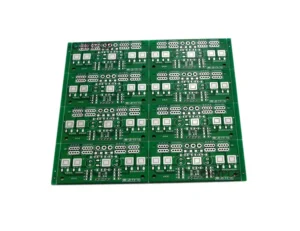
KB-6160PCB
As a PCB company from China, we’ve watched this Thailand build-out from the sourcing side of the table — helping overseas buyers figure out which boards genuinely need to move and which ones are better left with a specialized mainland partner. Guangzhou Mineng Electronics Co., Ltd. (CHNPCB) manufactures single-sided boards, double-sided boards, and aluminum substrate PCBs from our facility in Guangzhou, built around KB6160-grade laminate and quality control processes proven across export orders to Thailand, Singapore, Australia, and beyond. For non-standard runs, ultra-long boards, or PCBA cloning projects that large-scale Thailand facilities aren’t built to handle economically, reach us directly at PCB@CHNPCB.COM.