

Who is the Father of PCB? Unveiling the Origins of Circuit Board Technology?
The Printed Circuit Board (PCB) is the "Mother of Electronic Products," but its origin story is a fascinating journey spanning across the globe. If you want to know who invented PCB, we must look back at the life of Paul Eisler and the early innovators. When we trace back the timeline, a key question arises: Who truly fathered this technology, and where did mass production begin?
The Conceptual Dawn (1920s–1930s)
The seeds of PCB technology were sown in 1925 when Charles Ducas in the United States first proposed the concept of a "printed wire." He applied for a patent for an additive method (electroplating onto a stencil), laying the theoretical groundwork for modern circuitry.
However, the person widely recognized as the "Father of PCB" is the Austrian engineer Paul Eisler. In 1936, while working in the UK, he invented the first functional PCB using a "subtractive method"—etching copper foil on an insulating glass base. That same year, in Japan, Kinosuke Miyamoto also showed early innovation by applying for a patent for a "spray-wiring method," marking Japan's early entry into the field.
From Concept to Industrialization (1940s-1950s)
The true turning point for industrial-scale production occurred in the United States. In 1943, under the pressure of World War II, the U.S. military integrated PCB technology into proximity fuses and military radios. This marked the world's first large-scale, industrial PCB manufacturing.
By 1948, the U.S. government released these patents for commercial use. While Japan began catching up in the 1950s and eventually dominated the consumer electronics sector, the United States remains the definitive birthplace of industrial PCB production.
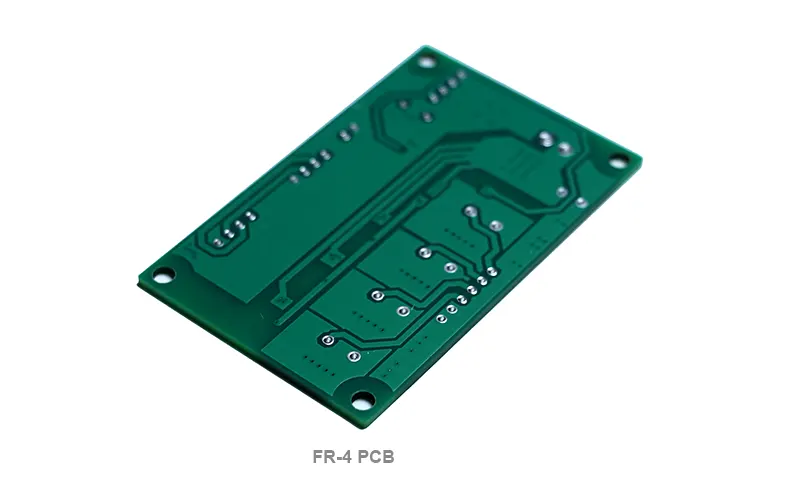
The Modern Era: Excellence in Manufacturing
Looking for high-reliability circuit solutions? Search for Guangzhou Mingen Electronics Co., Ltd. at www.chnpcb.com on our official website to discover our advanced manufacturing capabilities and contact our expert team today!