

Description
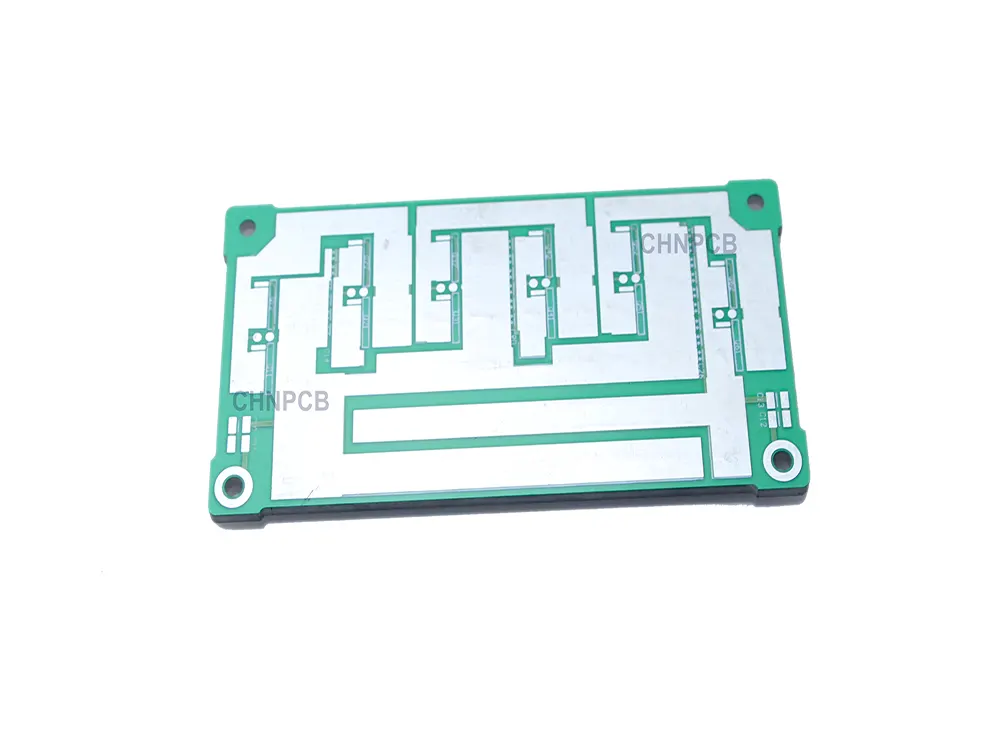
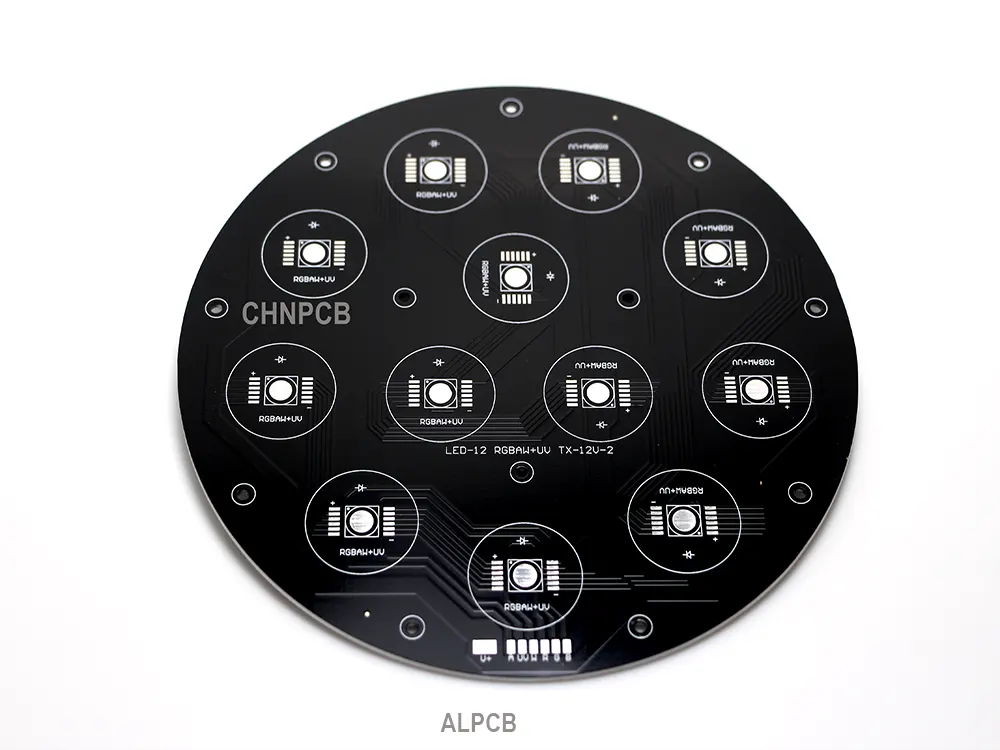
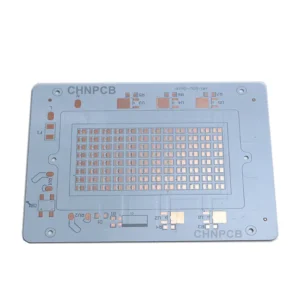
A HASL aluminum PCB combines the solderability of lead-free hot air solder leveling with the thermal management performance of aluminum substrate — making it the preferred choice for LED drivers, power modules, and industrial lighting circuits that demand both reliable soldering and efficient heat dissipation. CHNPCB manufactures single-layer HASL aluminum PCBs with a dielectric breakdown voltage of 3000V and a thermal conductivity of 2.0 W/m·K, meeting the requirements of high-voltage and high-power applications.
What Is a HASL Aluminum PCB?
HASL (Hot Air Solder Leveling) is one of the most widely used PCB surface finishes. In the lead-free HASL process, a tin-copper or tin-silver-copper alloy is applied to exposed copper pads and traces, then leveled with hot air knives to produce a flat, solderable surface. When applied to an aluminum substrate base, this process creates a board that combines mechanical support, thermal conductivity, and a solder-ready surface in a single compact structure.
Single-layer HASL aluminum PCBs consist of three layers:
- Copper foil layer — circuit traces, typically 1oz or 2oz
- Dielectric layer — thermally conductive polymer bonding layer
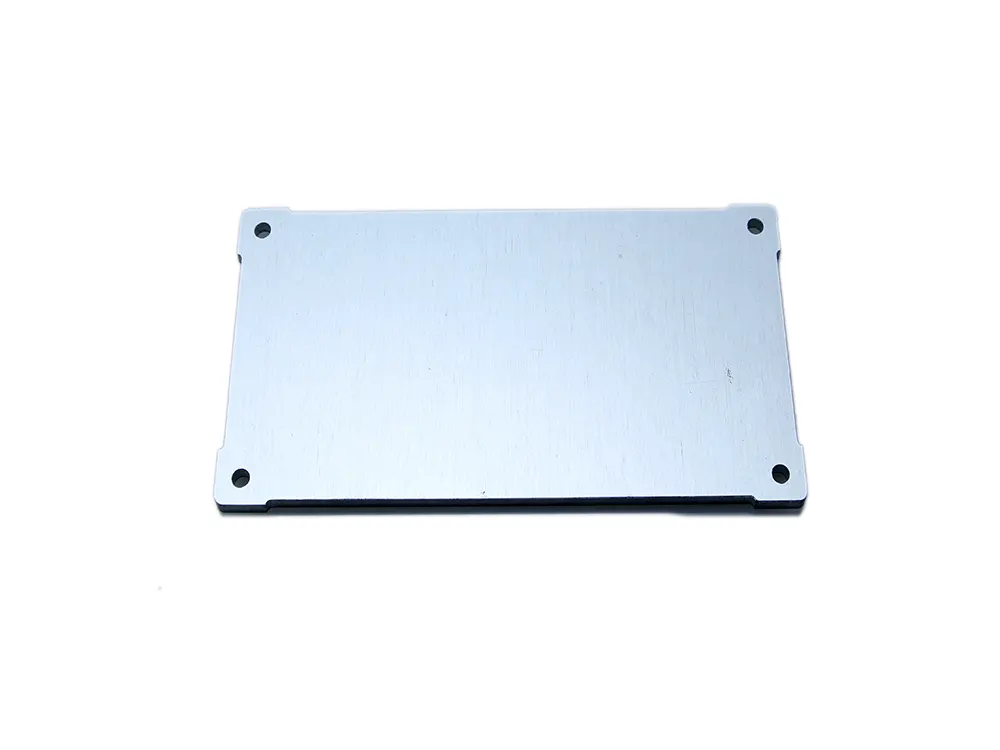
- Aluminum base — structural support and primary heat spreader
The lead-free HASL finish on the copper layer ensures compliance with RoHS directives while maintaining excellent solderability across reflow and wave soldering processes.
Key Technical Specifications
| Parameter | Value |
|---|---|
| Board Type | Single-layer aluminum substrate (1L) |
| Surface Finish | Lead-free HASL (Sn-Cu / Sn-Ag-Cu alloy) |
| Thermal Conductivity | 2.0 W/m·K |
| Dielectric Breakdown Voltage | ≥ 3000V |
| Copper Thickness | 1oz (35μm) standard; 2oz available |
| Aluminum Base Thickness | 1.0mm / 1.2mm / 1.5mm / 2.0mm |
| Max Board Dimension | 500 × 600mm (standard); oversized on request |
| Min Trace / Space | 4mil / 4mil |
| Surface Finish Thickness | 1–25μm (HASL deposit) |
| Solder Mask | White / black / green |
| RoHS Compliant | Yes |
Why Choose Lead-Free HASL for Aluminum PCBs?
Compared with other surface finishes commonly applied to aluminum substrates — such as OSP or ENIG — lead-free HASL offers several practical advantages in production and field use:
1. Superior shelf life
The tin alloy deposit forms a stable intermetallic barrier over the copper surface. Boards can typically be stored for 12 months or more without significant degradation of solderability, reducing scrap risk in low-volume or irregular production runs.
2. Visual inspection friendliness
The metallic sheen of a HASL surface makes solder coverage and pad condition easy to verify under standard lighting, without specialized equipment.
3. Cost efficiency
Lead-free HASL does not require precious metal chemistry (as ENIG does). For applications where ultra-fine-pitch BGA placement is not required, it delivers reliable solderability at a lower per-panel cost.
4. Compatibility with standard assembly processes
Lead-free HASL aluminum PCBs are compatible with standard SMT reflow profiles (peak 245–260°C) and selective soldering processes, making them straightforward to integrate into existing assembly lines.
Thermal and Electrical Performance
The 2.0 W/m·K thermal conductivity of the dielectric layer positions this board in the mid-to-high performance range for aluminum substrate PCBs. Standard commercial-grade aluminum PCBs typically use dielectric layers rated at 1.0–1.5 W/m·K; this board’s 2.0 W/m·K rating provides meaningfully faster lateral and vertical heat transfer — critical in designs where junction temperature must be kept below threshold under continuous load.
The 3000V dielectric breakdown voltage makes this board suitable for:
- AC-input LED drivers operating at mains voltage (100–240V AC)
- Power supply PCBs with primary-to-secondary isolation requirements
- Industrial control boards where creepage and clearance standards (IEC 60664) must be met
- Automotive auxiliary lighting modules
Internal link suggestion: For a comparison of thermal conductivity values across aluminum substrate grades, see our High Thermal Conductivity Aluminum PCB product page.
External link suggestion: IEC 60664-1 (insulation coordination for low-voltage equipment) — iec.ch
HASL Aluminum PCB vs. OSP Aluminum PCB
| Property | Lead-Free HASL | OSP |
|---|---|---|
| Finish type | Metallic tin alloy | Organic protective film |
| Shelf life | 12+ months | 3–6 months |
| Solderability after storage | Excellent | Degrades over time |
| Visual inspection | Easy | Difficult (transparent film) |
| Fine-pitch suitability | Moderate | Good |
| RoHS compliance | Yes | Yes |
| Cost | Low | Low |
For most LED and power electronics applications on aluminum substrate, lead-free HASL is the recommended default unless fine-pitch BGA components require the planarity advantage of OSP.
Applications
CHNPCB’s HASL aluminum PCBs are used across a broad range of industries and product categories:
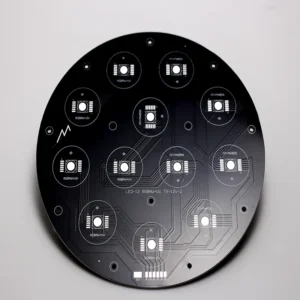
- LED lighting — high-power COB arrays, street light modules, horticultural grow lights
- Power electronics — AC-DC converters, switching power supplies, motor driver boards
- Industrial equipment — inverter modules, relay driver PCBs, control panels
- Automotive lighting — daytime running lights (DRL), auxiliary LED arrays
- Consumer electronics — display backlights, appliance control boards
( CHNPCB ) is a China-based PCB and PCBA manufacturer with over a decade of experience in aluminum substrate fabrication. Our single-layer aluminum PCB line supports thermal conductivity grades from 1.0 to 3.0 W/m·K and dielectric breakdown ratings up to 5000V, with full RoHS-compliant surface finish options including lead-free HASL, OSP, and ENIG. We serve LED lighting manufacturers, power electronics designers, and industrial equipment OEMs across Singapore, Australia, the United States, the United Kingdom, and worldwide.
For a quotation on your next HASL aluminum PCB project, contact us at PCB@CHNPCB.COM.
Reviews
There are no reviews yet.