

Panasonic CEM-3 PCB Material is a practical choice for single and double-sided rigid PCBs used in LED lighting, power electronics, consumer electronics, and industrial control applications. As a PCB manufacturer from China, CHNPCB provides PCB solutions based on different material requirements, helping customers select suitable substrates according to electrical performance, thermal conditions, manufacturing requirements, and cost targets.
With electronic products becoming smaller and more powerful, PCB material selection has become an important part of product reliability. Different applications require different balances between thermal management, mechanical performance, manufacturing efficiency, and overall cost.
What Is CEM-3 PCB Material?
CEM-3 (Composite Epoxy Material 3) is a composite epoxy copper clad laminate widely used for rigid PCB manufacturing.
Unlike traditional FR-4 materials that mainly use woven glass fabric structures, CEM-3 combines glass fabric, glass paper, and epoxy resin to create a composite structure.
The typical structure includes:
- Glass fabric surface layer
- Glass paper epoxy core layer
- Copper foil laminated through heat pressing
This structure provides CEM-3 with:
- Reliable electrical insulation
- Good mechanical strength
- Excellent drilling and punching performance
- Stable PCB manufacturing capability
CEM-3 materials are commonly used in:
- LED lighting PCBs
- Power control boards
- Consumer electronics
- Home appliance electronics
- Industrial control circuits
Panasonic R-1786 and R-1787 CEM-3 PCB Material
Different PCB structures require different laminate solutions. CHNPCB uses Panasonic R-1786 and R-1787 CEM-3 materials for different single-sided and double-sided PCB applications.
Panasonic R-1786 CEM-3 for Double-sided PCB
Panasonic R-1786 is commonly used for double-sided CEM-3 PCB manufacturing.
It is suitable for applications requiring:
- Double-sided circuit design
- Reliable electrical performance
- Stable through-hole processing
- Balanced manufacturing cost
Typical applications include:
- LED control boards
- Power control circuits
- Electronic equipment
- Industrial control boards
Panasonic R-1787 CEM-3 for Single-sided PCB
Panasonic R-1787 is suitable for single-sided CEM-3 PCB applications.
It provides a practical solution for products requiring:
- Simple circuit structures
- Reliable PCB performance
- Efficient manufacturing
- Cost control
Typical applications include:
- Lighting control boards
- Household electronic products
- Electronic modules
- General-purpose control circuits
Thermally Conductive CEM-3 PCB Material for LED Applications
Thermally Conductive CEM-3 PCB Material is developed for electronic products where thermal management is an important consideration.
For LED lighting and power-related applications, heat generated during operation can affect product reliability. Selecting a suitable PCB substrate helps improve thermal control and long-term stability.
However, not every LED product requires an aluminum PCB.
For applications with moderate thermal requirements, CEM-3 can provide a practical balance between:
- Thermal management
- Electrical insulation
- PCB manufacturing efficiency
- Material cost
Typical applications include:
- LED lighting systems
- Stage lighting control boards
- LED driver circuits
- Power control boards
CEM-3 PCB vs Double-sided Aluminum PCB
For thermal applications, aluminum PCB provides excellent heat dissipation performance. However, aluminum PCB generally has higher material and manufacturing costs.
In many LED and electronic control applications, double-sided CEM-3 PCB can provide a more economical solution when extreme thermal performance is not required.
Compared with double-sided aluminum PCB, double-sided CEM-3 PCB can reduce material cost significantly in suitable applications, while still maintaining reliable electrical performance and manufacturing stability.
The choice between CEM-3 and aluminum PCB depends on:
- Heat generation level
- Thermal requirements
- PCB structure
- Product lifetime expectations
- Target cost
For high-power thermal applications, aluminum PCB may be preferred. For moderate thermal requirements, CEM-3 can provide an effective balance between performance and cost.
PCB Manufacturing Capability with CEM-3 Materials
Material selection is only one part of PCB quality.
A professional PCB manufacturer must also control:
- Drilling parameters
- Copper thickness
- Hole quality
- Circuit compensation
- Plating process
- Solder mask processing
- Electrical testing
CHNPCB provides custom PCB fabrication and PCBA assembly services using different materials including FR-4, CEM-3, aluminum PCB, and other specialized substrates.
With practical PCB manufacturing experience, CHNPCB supports customers in China, Singapore, Australia, and global markets with reliable PCB solutions.
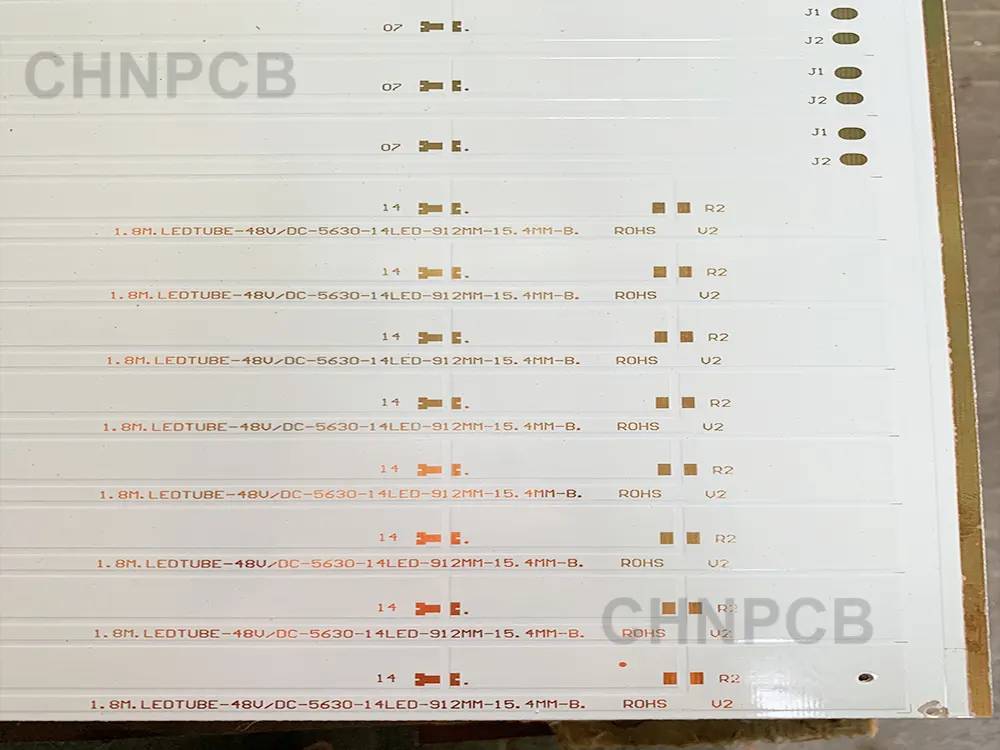
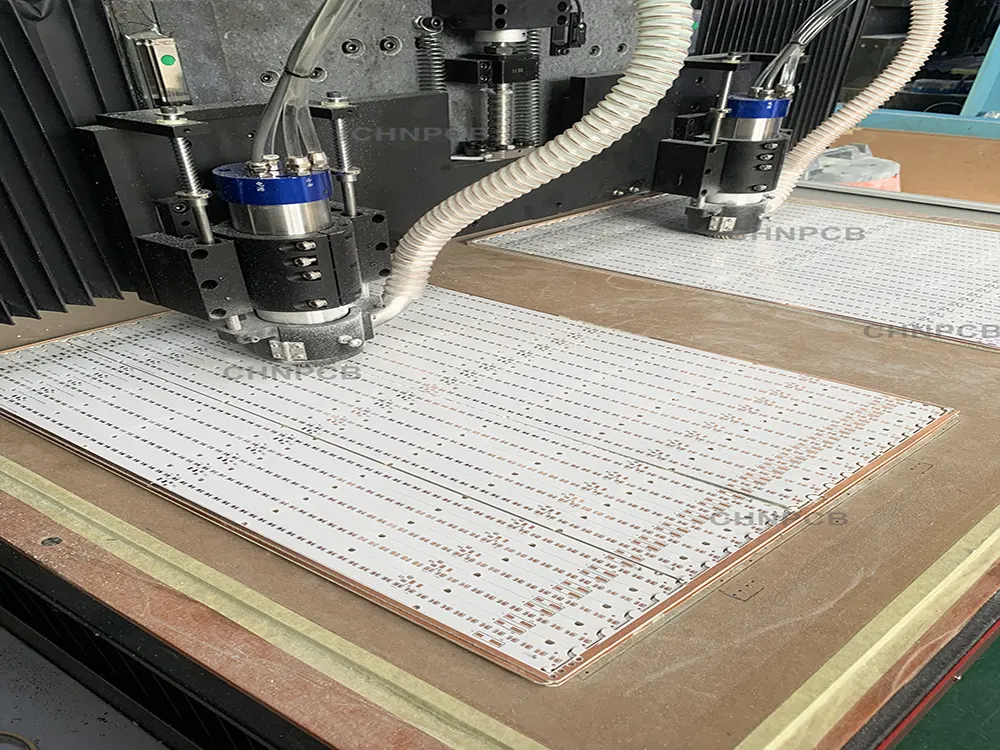
Panasonic CEM-3 PCB Material provides a practical option for single-sided and double-sided rigid PCB applications.
With Panasonic R-1786 for double-sided PCB and R-1787 for single-sided PCB applications, CEM-3 materials can support LED lighting, power electronics, consumer electronics, and industrial control products.
Compared with double-sided aluminum PCB, CEM-3 can provide a significant cost advantage in applications where extreme thermal performance is not required.
As a China-based PCB manufacturer, CHNPCB focuses on selecting suitable PCB materials and manufacturing processes according to customer requirements.
As a PCB company from China, Guangzhou Mineng Electronics Co., Ltd. (CHNPCB) has built up practical, hands-on manufacturing experience with thermally conductive CEM-3 laminates, from material selection and punching through SMT assembly. CHNPCB currently serves LED lighting and power electronics customers in Singapore, Malaysia, Vietnam, Thailand, Germany, the UK, and Australia, among other markets, and welcomes inquiries for Panasonic CEM-3 grades R-1786 (double-sided) and R-1787 (single-sided), or general PCB manufacturing needs, at PCB@CHNPCB.COM.