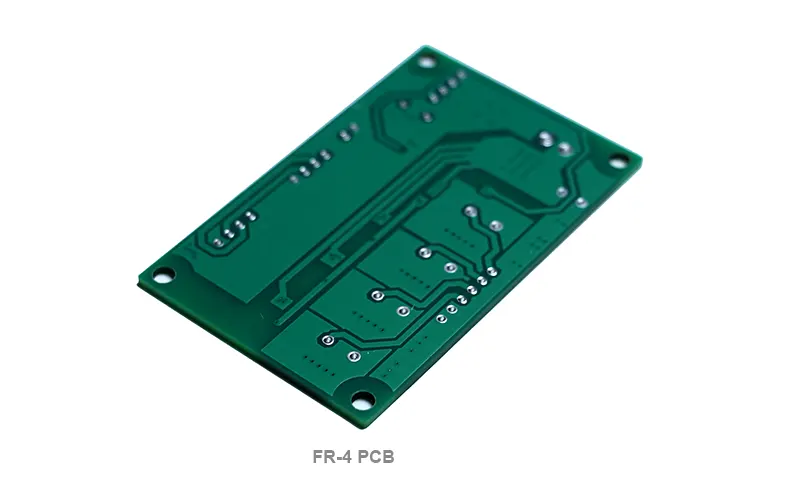

Another Chinese AI server PCB manufacturer is scaling up to meet Nvidia's exploding demand. Wus Printed Circuit — publicly known as Hudian Co., Ltd. (stock code 002463) — has signed an agreement to invest an additional RMB 3.6 billion in its Huangshi, Hubei facility, dedicated to high-end PCBs for AI servers and AI chips. For anyone tracking the AI hardware supply chain, this is a signal worth paying attention to.
A New Investment Round in Hubei
On August 26, Wus Printed Circuit signed an agreement with the Tieshan district of Huangshi's development zone to invest an additional RMB 3.6 billion in a production line built specifically for high-end PCBs used in AI servers and AI chips. This is not the company's first move in the region. Its Huangshi operation began in 2011 with an initial RMB 3.3 billion investment, expanded again in 2019 into the new-energy and smart-connected vehicle sector, and has now accumulated more than RMB 7 billion in total investment there — enough to anchor what local officials describe as a "hundred-billion-yuan industrial park."
The pace of growth tells its own story. In 2024, the Huangshi facility generated RMB 2.929 billion in revenue and nearly RMB 500 million in net profit, up 47.33% and 47.65% year-over-year respectively. In the first half of this year, output value grew more than 60%, with full-year output projected to exceed RMB 4 billion — and management expects that figure to eventually surpass RMB 10 billion once the new project comes online.
From GB200 to Rubin: The Nvidia Supply Chain Connection
What makes this expansion significant beyond the regional headlines is the parent company's position in Nvidia's supply chain. Hudian Co., Ltd. was the first company globally to pass Nvidia's certification for 78-layer M9-grade orthogonal backplanes, and it holds an exclusive supply position for GB200 AI server PCBs while also being qualified into the Rubin (GB300) platform's core supply chain. Its UBB motherboard share for the H200 platform reportedly exceeds 70%, and its share of the North American AI server PCB market is estimated above 80%.
That context explains why an AI server PCB manufacturer would be pouring fresh capital into a facility that, until recently, was still transitioning away from traditional circuit boards. AI-grade PCBs demand far higher insulation and thermal conductivity than consumer or automotive boards, and the layer counts, materials, and process tolerances involved make retrofitting old lines impractical. Building dedicated new capacity, as this investment does, is becoming the standard playbook for suppliers trying to keep pace with Nvidia's roadmap.
Why Huangshi Is Becoming a PCB Manufacturing Hub
The ripple effects extend well beyond one company. The Tieshan development zone now hosts roughly two-thirds of all PCB enterprises in Hubei province, with 10 companies generating over RMB 1 billion in annual output, 6 exceeding RMB 5 billion, and 2 surpassing RMB 10 billion. From January to August, the zone signed 19 new projects across high-layer HDI boards, high-end electronic materials, and copper-clad laminate — worth a combined RMB 1.225 billion — reflecting a shift from isolated breakthroughs to a fuller, more integrated supply chain.
Supporting suppliers are moving in step. Companies specializing in laser and mechanical drilling, high-frequency copper-clad laminate, and AI-grade glass fiber cloth have all recently established or expanded operations in the same zone, creating tighter coordination between board manufacturers and their upstream material partners. Regional electronics output value in the zone grew 23.8% year-over-year in the first seven months of the year, a pace that outstrips the broader PCB industry average.
What This Means for the Global AI PCB Market
That dynamic is drawing more capacity into China's PCB manufacturing base overall, not just at the very top of the supply chain. As demand cascades down through multilayer boards, HDI boards, and specialty substrates, manufacturers across the country — including smaller and mid-sized producers — are seeing spillover demand for adjacent product lines: heavy copper boards, high thermal conductivity aluminum substrates, and non-standard multilayer designs that the largest suppliers are too capacity-constrained to prioritize.
Final Thoughts
Nvidia's supply chain in China isn't limited to one company — it's a widening network of PCB manufacturers, laminate producers, and drilling specialists all scaling in parallel. Wus Printed Circuit's Huangshi expansion is one more confirmation that this AI server PCB manufacturer ecosystem is deepening rather than plateauing, and that capacity investment decisions being made in China today are shaping global AI hardware availability over the next several years.