

For many B2B buyers, PCB sourcing from China starts with a spreadsheet of quotes and ends with a stressful scramble over missed lead times or failed incoming inspection. The difference between a smooth supply relationship and a recurring headache almost always comes down to three factors: how quality is controlled, how prototyping is handled before mass production, and how realistically lead times are quoted in the first place.
Why Quality Control Has to Start Before Production
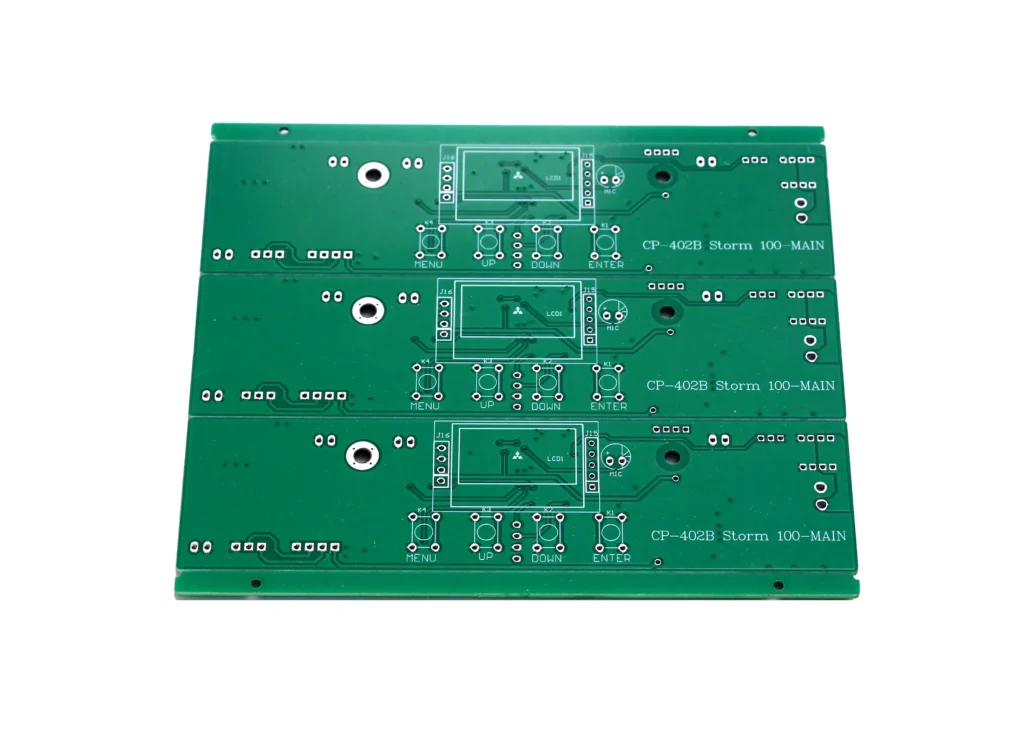
Double-sided PCB panel — China manufactured
Quality can’t be inspected in after the fact — it has to be built into the process. Buyers should ask suppliers specific questions before placing an order: What IPC class does the factory build to (IPC Class 2 vs. Class 3)? Is AOI (Automated Optical Inspection) run on every panel, or only sampled? Is there a flying probe or bed-of-nails electrical test for every board, especially for multilayer designs where internal shorts and opens aren’t visible from the outside?
A manufacturer that can answer these questions specifically — rather than with generic assurances — is one worth shortlisting. It’s also worth asking for the actual inspection report format they use, not just a claim that “we do QC.” Surface finish choice (such as HASL vs. OSP) is another area where suppliers should be specific rather than defaulting to whatever’s cheapest to run.
Prototyping: The Step That Prevents Expensive Mistakes
Skipping proper prototyping is one of the most common — and costly — mistakes in B2B PCB sourcing. A small prototype run allows engineering teams to validate the design, confirm impedance control on high-speed layers, and catch footprint or drill errors before committing to a production run of thousands of units.
Good suppliers will flag design-for-manufacturing (DFM) issues at the prototype stage — things like insufficient copper-to-edge clearance, via-in-pad concerns, or solder mask registration risks — rather than silently building exactly what was submitted and letting yield problems surface later. This is also the stage where non-standard materials, such as heavy copper (2oz and above) or high-thermal-conductivity aluminum substrates, should be validated, since these require specialized equipment that not every factory carries.
Setting Realistic Lead Times — and Knowing What Drives Them
Lead time quotes vary widely, and the gap between a “best case” number and a realistic one usually comes down to a few factors: current fiberglass cloth and copper foil availability, whether the board uses standard or specialty laminate (Panasonic CEM-3 and Kingboard KB6160-series materials, for example, often carry longer lead times than commodity FR-4), and how many layers and special processes (blind/buried vias, controlled impedance) the design requires.
Buyers who ask for a lead time breakdown — engineering review, material procurement, fabrication, assembly if applicable, and shipping — get a far more reliable delivery date than those who accept a single round number. It also helps to clarify upfront whether the quoted time starts from order confirmation or from final file approval, since those can differ by several days.
Building a Repeatable Sourcing Process
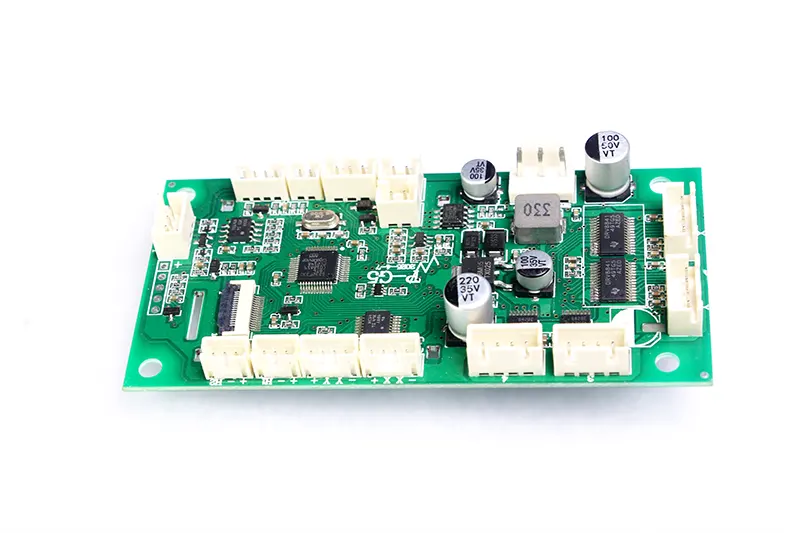
CHNPCB PCBA ; Stage Lighting Driver PCBA
The buyers who get the best long-term results from PCB sourcing from China treat it as a repeatable process, not a one-off transaction: they standardize their technical documentation (Gerber files, IPC netlist, assembly drawings), they qualify 1–2 suppliers deeply rather than spreading small orders across many, and they build in a prototype-to-production checkpoint on every new design, even when working with an established supplier.
This approach costs a small amount of time upfront but consistently prevents the two most expensive outcomes in overseas sourcing: quality failures discovered after shipment, and lead time surprises that cascade into missed customer deadlines.
As a PCB company from China, we work directly with procurement and engineering teams across Southeast Asia, Australia, and Europe who need this kind of process-first approach rather than a purely price-driven one. Guangzhou Mingen Electronics Co., Ltd. (CHNPCB) has built its production around exactly the categories where sourcing missteps are most costly — heavy copper boards, high thermal conductivity aluminum substrates, and ultra-long double-sided FR-4 boards — supported by IPC-standard inspection at every production stage from our facility in Guangzhou.
If you’re evaluating PCB sourcing from China for an upcoming project, email us at PCB@CHNPCB.COM and we’ll walk through your specs, quality requirements, and realistic lead time directly with our engineering team.